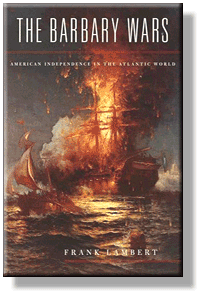
American independence was secured from Britain on September 3, 1783. On October 11, 1784, the American merchant ship Betsey was captured by Sallee Rovers, state-sponsored pirates operating out of the ports of Morocco. Algerian pirates quickly seized two more American ships: the boats were confiscated, their crews held captive, and ransom demanded of the fledging American government.
The history of America's conflict with the piratical states of the Barbary Coast runs through the presidencies of Washington, Adams, Jefferson and Madison; the adoption of the Constitution; the Quasi-War with France and the War of 1812; the construction of a full-time professional navy; and, most important, the nation's haltering steps toward commercial independence. Frank Lambert's genius is to see in the Barbary Wars the ideal means of capturing the new nation's shaky emergence in the complex context of the Atlantic world.
Depicting a time when Britain ruled the seas and France most of Europe, The Barbary Wars proves America's earliest conflict with the Arabic world was always a struggle for economic advantage rather than any clash of cultures or religions. |